
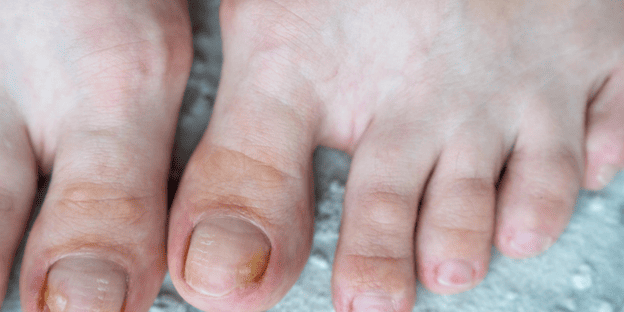
Toenail fungal infections, also called onychomycosis, can appear in several clinical patterns. Three commonly recognized patterns are Distal Subungual Onychomycosis, White Superficial Onychomycosis, and Proximal Subungual Onychomycosis. Each begins in a different part of the nail and can create a somewhat different appearance. Some cause yellow discoloration and crumbly debris beneath the nail, while others appear as chalky white surface patches or changes that begin near the cuticle.
At LA Foot Laser in Los Angeles, our podiatrists evaluate fungal nail changes and offer laser therapy for patients with onychomycosis. Laser treatment delivers energy through the nail plate without the systemic exposure associated with oral antifungal medication.
If you have been trying to figure out which type of toenail fungus you may have, where the nail changes begin can provide an important clue. The location, appearance, and progression of the changes help a podiatrist determine which pattern may be present. Because other nail conditions can resemble fungus, however, appearance alone does not always confirm the diagnosis.
Understanding Onychomycosis: How Fungal Pathogens Affect the Nail Unit
The Anatomy of the Toenail Unit
Before comparing the different types of toenail fungus, it helps to understand the basic parts of the nail:
- Nail plate: The hard, visible portion of the nail, formed from layers of keratin.
- Nail bed: The vascular layer of skin beneath the nail plate that helps anchor the plate as it grows forward.
- Hyponychium: The area at the tip of the toe where the nail plate separates from the underlying skin and helps form a barrier against outside organisms.
- Lateral nail folds: The strips of skin bordering each side of the nail plate.
- Proximal germinal matrix: The tissue beneath the cuticle at the base of the nail where new nail cells are generated, and nail growth begins.
Fungal infection can involve different parts of the nail unit. That is why podiatrists look closely at where discoloration, thickening, lifting, or surface changes begin rather than relying on nail color alone.
Primary Fungal Organisms: Dermatophytes, Yeasts, and Molds
Toenail infections are commonly caused by fungi known as dermatophytes, including Trichophyton rubrum and Trichophyton mentagrophytes. These organisms affect keratin-containing tissues and tend to thrive in warm, moist environments.
Yeasts and non-dermatophyte molds can also be involved in fungal nail infections. Because different organisms can cause onychomycosis, and because other nail disorders can look similar, identifying what is actually affecting the nail is an important part of choosing treatment.
Also Read: Understanding Toenail Fungus: Causes, Symptoms, and Treatments in Los Angeles
3 Types of Toenail Fungus and How They Compare
1. Distal Subungual Onychomycosis (DSO): The Most Common Form
Distal Subungual Onychomycosis typically begins beneath the nail near the free edge or sides and progresses back toward the cuticle. It is one of the most common patterns of fungal toenail infection.
Common signs include:
- Yellow, brown, or darker discoloration along the nail
- Thick, crumbly debris underneath the nail
- Separation of the nail plate from the nail bed, known as onycholysis
- A brittle nail that breaks or crumbles more easily
As the infection progresses, the nail may become increasingly thickened or distorted. Someone with DSO may first notice a small change near the tip or side of the nail before more of the nail becomes involved.
2. White Superficial Onychomycosis (WSO): Changes on the Nail Surface
White Superficial Onychomycosis affects the outer layers of the nail plate and may leave deeper portions of the nail relatively unaffected early in the process. Instead of beginning underneath the nail, the visible changes typically appear directly on its surface.
Signs can include:
Chalky white spots or patches
A rough or powder-like surface
Patches that spread or merge over time
Surface crumbling or erosion of the nail plate
The surface-level appearance makes WSO look quite different from the thick debris and lifting commonly associated with DSO. Still, not every white area on a toenail is fungus, so persistent changes should be evaluated rather than diagnosed based on appearance alone.
3. Proximal Subungual Onychomycosis (PSO): Changes Beginning Near the Cuticle
Proximal Subungual Onychomycosis begins near the proximal nail fold at the base of the nail rather than at the tip. As the nail grows, discoloration can extend outward toward the end of the toe.
Key features include:
- White or yellow discoloration beginning near the base of the nail
- Nail changes that gradually extend toward the tip
- Involvement near the proximal nail fold and nail matrix
This pattern is less common than distal subungual disease and has a stronger association with people who are immunocompromised. Because changes near the base of the nail can have several causes, a podiatrist may also ask about your medical history when evaluating this pattern.
Comparing the 3 Toenail Fungus Patterns
| Type | Where It Starts | Common Visual Signs | How It Progresses |
|---|---|---|---|
| Distal Subungual (DSO) | Under the tip or side edge of the nail | Yellow or brown discoloration, thick debris, lifting | Typically progresses from the distal or lateral nail toward the base |
| White Superficial (WSO) | Outer surface of the nail plate | Chalky white patches, powdery or rough surface | Can spread across the nail surface and cause surface crumbling |
| Proximal Subungual (PSO) | Base of the nail near the cuticle | White or yellow area beginning near the nail base | Progresses outward as the nail grows |
These differences can help narrow down what may be happening, but there can be overlap between patterns. Other nail problems can also resemble onychomycosis. Your podiatrist can evaluate the entire nail rather than relying on one symptom or visual characteristic.
Also Read: Laser Toenail Fungus Treatment: Your Top Questions Answered
How Laser Therapy Is Used for Toenail Fungus in Los Angeles
Laser therapy offers an in-office treatment option for patients with fungal toenail concerns. Laser devices used for onychomycosis deliver energy through the nail plate without requiring oral medication. Certain laser systems are FDA-cleared for a temporary increase in clear nail in patients with onychomycosis.
Because laser devices and treatment protocols vary, your podiatrist can explain what the treatment is designed to accomplish and what results may be realistic for your nails. Laser therapy should not be viewed as a guaranteed way to eliminate a fungal infection. The FDA-cleared indication for these devices focuses on an increase in clear nail.
How Laser Treatment Differs From Topical and Oral Medication
Onychomycosis can be challenging to treat because the infection involves a hard keratin structure that grows slowly. Topical antifungal medications must penetrate the nail to reach affected areas, which can limit how well they work in some cases.
Oral antifungal medications work systemically and can be effective for appropriate patients, but they also come with medical considerations and potential drug interactions. Depending on the medication and the patient’s health history, laboratory monitoring may be appropriate.
Laser therapy provides another approach by delivering energy through the nail plate without the systemic exposure associated with oral antifungal medication. The right approach depends on the diagnosis, how much of the nail is involved, previous treatments, health history, and individual treatment goals.
What to Expect During Laser Toenail Fungus Treatment
The exact treatment plan depends on what your podiatrist sees during the evaluation and the extent of the nail changes.
Step 1: Consultation and Diagnostic Exam
Your podiatrist examines where the nail changes begin, the pattern of discoloration or damage, nail thickness, and other clinical findings. This helps determine whether onychomycosis is suspected and which pattern may be present. Additional testing may be recommended when needed to confirm a fungal infection.
Step 2: Nail Preparation When Needed
Thickened nails may be trimmed or thinned when clinically appropriate. This can make an overgrown or distorted nail easier to manage during treatment.
Step 3: In-Office Laser Treatment
Laser energy is applied to the affected nail according to the treatment protocol used by the practice. The treatment experience and session length can vary depending on the number and condition of the nails being treated.
Step 4: Post-Treatment Care and Nail Growth
Changes in the nail do not disappear overnight. Toenails grow slowly, so clearer-looking nail becomes visible gradually as new nail grows from the base. Your podiatrist may also recommend preventive measures intended to reduce the risk of reinfection while the nail grows out.
Why Choose LA Foot Laser in Los Angeles?
Dr. Kourosh Harounian is a board-certified foot and ankle specialist who evaluates and treats fungal nail conditions at LA Foot Laser. Treatment recommendations are based on the appearance and condition of the nail, the suspected or confirmed diagnosis, the extent of involvement, and each patient’s medical history and treatment goals.
For someone who has repeatedly tried to manage a thick, discolored, or damaged toenail without seeing the improvement they expected, another round of treatment without confirming what is happening may not be the best next step. A podiatric evaluation can clarify whether the changes are consistent with onychomycosis and whether laser treatment makes sense for the individual nail.
Also Read: PinPointe Foot Laser: A Modern Remedy for Persistent Toenail Fungus
Frequently Asked Questions About Toenail Fungus
How Do I Know Which Type of Toenail Fungus I Have?
Where the nail changes begin provides one of the strongest visual clues. Yellow discoloration, debris, and lifting near the tip or sides may suggest Distal Subungual Onychomycosis. Chalky white patches on the surface may be consistent with White Superficial Onychomycosis, while changes beginning near the cuticle can suggest Proximal Subungual Onychomycosis. Because several nail conditions can resemble fungus, a podiatrist may recommend additional testing when needed to confirm the diagnosis.
Can Laser Therapy Be Used for Different Types of Toenail Fungus?
Laser therapy may be considered for patients with different clinical patterns of onychomycosis, depending on the individual nail and the device being used. FDA-cleared laser systems for onychomycosis are cleared for a temporary increase in clear nail, so treatment expectations should be discussed with your podiatrist.
Is Laser Toenail Fungus Treatment Painful?
Most patients tolerate laser treatment well, although the experience can vary. Your podiatrist can explain what sensations to expect with the specific laser system used during treatment.
How Many Laser Sessions Will I Need?
There is no single treatment schedule that applies to every fungal nail. The number of sessions can depend on the condition of the nails, the extent of involvement, the laser system and protocol being used, and how the nails respond. Your podiatrist can recommend a treatment schedule after examining your nails.
How Long Does It Take to See Clearer Toenail Growth After Laser Treatment?
Toenails grow slowly, so changes in appearance are gradual rather than immediate. Clearer-looking nail becomes visible as new nail grows from the base and the older nail moves outward. The timeline varies depending on the nail involved, its growth rate, and the extent of the original changes.
Where Can I Get Laser Treatment for Toenail Fungus in Los Angeles?
LA Foot Laser evaluates patients with fungal toenail concerns in Los Angeles. A podiatrist can examine the affected nails, determine whether the changes are consistent with onychomycosis, and discuss whether laser therapy or another treatment approach may be appropriate.
Find Out What’s Causing Your Toenail Changes
Yellow thickening near the tip, chalky white patches on the surface, and discoloration beginning near the cuticle can point toward different patterns of onychomycosis. They can also overlap with other nail conditions. Knowing what the nail looks like is helpful, but determining why it looks that way is what guides treatment.
If you are dealing with a thickened, discolored, brittle, or damaged toenail, LA Foot Laser provides evaluation and laser treatment in Los Angeles. Dr. Kourosh Harounian can examine your nails, determine whether the changes are consistent with a fungal infection, and discuss which treatment approach may be appropriate for your case.
Schedule a consultation with LA Foot Laser to have your toenail concerns evaluated.