Toenail fungus is one of the most stubborn and embarrassing foot conditions a person can deal with. If you have tried over-the-counter creams, topical solutions, or oral medications without lasting results, you are not alone. At LA Foot Laser, Dr. Harounian offers a clinically proven, FDA-cleared laser treatment that targets the source of the infection safely and effectively, without medication and without downtime.
Whether you have been living with discolored or thickened nails for months or years, our team is here to help you take the first step toward healthier nails and restore confidence.
What Is Toenail Fungus?
Toenail fungus, clinically known as onychomycosis, is a fungal infection that lives beneath the nail plate and feeds on keratin, the protein that makes up your nails. It is more common than most people realize and can affect anyone, regardless of age or activity level
Common symptoms include:
Yellow, white, or brown discoloration of one or more toenails
Thickening or brittleness of the nail
A distorted nail shape or crumbling edges
Separation of the nail from the nail bed
An unpleasant odor coming from the affected nail
People who are most at risk include:
Athletes and individuals who wear tight or occlusive footwear
People who frequent gyms, pools, or locker rooms
Older adults, as nails grow more slowly and become more porous with age
Individuals with diabetes or compromised immune systems
Anyone who has previously had athlete’s foot
Left untreated, toenail fungus rarely resolves on its own. Over time, the infection can spread to neighboring nails and, in patients with diabetes or poor circulation, can lead to more serious foot health complications.
Why Laser Treatment Works When Other Options Fall Short
Many patients come to us after spending months or even years trying other treatments. Understanding why those approaches often fail helps explain why laser therapy is a superior option for most patients.
Topical Creams and Nail Solutions
Over-the-counter antifungal creams are widely available, but they are largely ineffective for toenail fungus. The nail plate acts as a physical barrier, and most topical treatments simply cannot penetrate deeply enough to reach the fungus living beneath it. Patients may notice temporary cosmetic improvement, but the infection persists.
Oral Antifungal Medications
Prescription oral medications such as Lamisil (terbinafine) can be effective, but they come with significant drawbacks. They require a treatment course of several months, regular blood tests to monitor liver function, and carry the risk of drug interactions and allergic reactions. Not all patients are candidates for oral antifungals, particularly those on multiple medications or with liver conditions.
Laser Treatment: A Smarter Approach
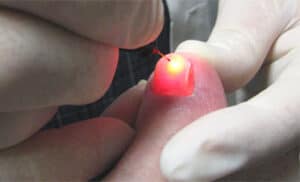
The PinPointe FootLaser used at LA Foot Laser works differently. It emits a tightly focused beam of near-infrared light that passes through the toenail and directly targets the fungal organisms embedded in the nail plate. The energy from the laser heats and destroys the fungus without damaging the surrounding nail or skin tissue.
Based on the studies submitted to the FDA, laser treatment demonstrates a higher clearance rate than oral medications. Unlike oral antifungals, the laser requires no blood testing, has no interactions with other medications, and carries no risk of liver toxicity or systemic side effects.
What to Expect During Your Laser Treatment
We understand that many patients feel anxious about medical procedures. Here is a clear, step-by-step overview of what your experience at LA Foot Laser will look like.
Step 1: Initial Consultation
Your first visit begins with a thorough physical examination of your nails and feet. Dr. Harounian will confirm the presence of a fungal infection, assess its severity, and discuss all available treatment options with you. He will take the time to answer your questions and explain what to expect throughout the process.
Step 2: Preparing for the Procedure
Before your treatment appointment, you will need to remove all nail polish and nail decorations from your toenails. This ensures the laser can reach the nail plate without any interference.
Step 3: The Laser Treatment
The procedure itself takes approximately 30 minutes. All ten toenails are typically treated during each session, even if not all nails appear visibly infected. This approach helps prevent the spread or recurrence of the fungus. Most patients feel little to no discomfort. Some report a mild warming sensation, and a very small number feel a brief pinprick sensation. There is no anesthesia required.
Step 4: After Your Treatment
There is no recovery period. You can walk out of the office exactly as you walked in, return to work, and resume all normal daily activities immediately. There are no bandages, no wound care, and no restrictions on footwear.
Step 5: Monitoring Your Results
It is important to understand that your nails will not appear clear immediately after the procedure. The laser kills the fungus, but the nail must grow out naturally to reveal healthy new growth. On average, a toenail replaces itself over six to nine months. Most patients begin to see visible healthy regrowth within the first three months. Toenails that are severely thickened or heavily infected may require more than one treatment session for optimal results.
The PinPointe FootLaser: FDA-Cleared Technology
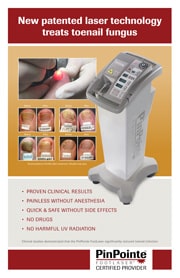
The PinPointe FootLaser is not a general-purpose medical laser. It was developed specifically for the treatment of toenail fungus over more than 20 years of research, supported by funding from the National Institutes of Health. It was developed collaboratively by scientists and medical professionals dedicated to solving this persistent condition.
The device operates in a very precise spectrum of near-infrared light, allowing it to penetrate the nail and eliminate the fungal organisms while leaving the nail and surrounding tissue unharmed. It is FDA-cleared for the temporary increase of clear nail in patients with onychomycosis.
At LA Foot Laser, we are proud to offer this technology to patients across the greater Los Angeles area.
Am I a Good Candidate for Laser Toenail Fungus Treatment?
Laser treatment is appropriate for a wide range of patients, including those who have already tried other treatments without success. The best way to determine whether you are a candidate is through a consultation with Dr. Harounian.
You may be a strong candidate if you:
Have one or more nails showing signs of fungal infection
Have tried topical treatments without lasting results
Are not able to take oral antifungal medications due to health conditions or drug interactions
Prefer a treatment with no systemic side effects
Are a diabetic patient in need of careful, specialized foot care
Dr. Harounian works with patients of all health backgrounds, including those with diabetes, hypertension, and other chronic conditions. A thorough evaluation at your first visit will ensure that your treatment plan is safe, personalized, and appropriate for your specific situation.
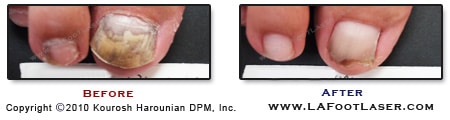
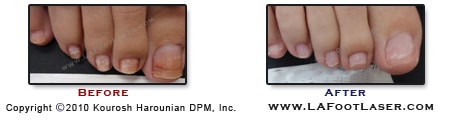
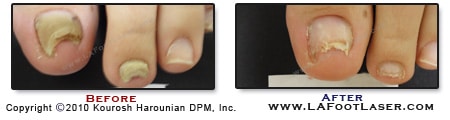
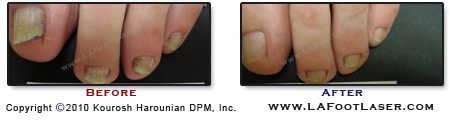
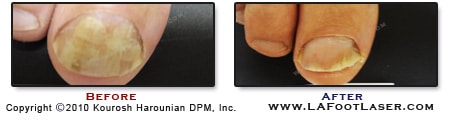
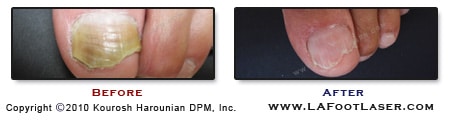
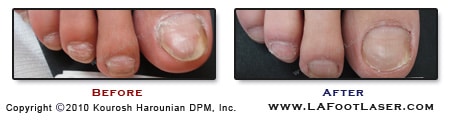
Real Patients, Real Results
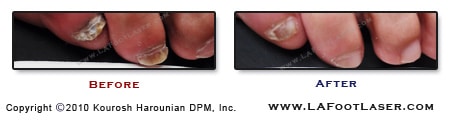
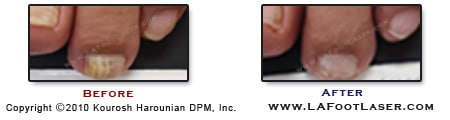
LA Foot Laser has helped patients ranging in age from their late twenties to their late seventies, many of whom had been living with toenail fungus for years or even decades. These patients had previously attempted a wide range of treatments, including oral prescription medications, topical solutions, home remedies, and natural treatments, all without lasting success.
Our before-and-after results speak to the effectiveness of laser treatment when it is performed by an experienced, board-certified podiatrist using the right technology. Individual results vary depending on the severity of the infection, the patient’s overall health, and adherence to aftercare recommendations.
Pricing and Payment Options
Laser toenail fungus treatment is not typically covered by standard medical insurance, as it is classified as a cosmetic procedure by most carriers. However, there are several flexible options available to make treatment accessible.
Payment options we accept include:
Major credit cards
Cash payment
Health Savings Accounts (HSA)
Medical Individual Retirement Accounts (Medical IRA)
Flexible Spending Accounts (FSA)
Financing arrangements available for qualifying patients upon credit approval
Please contact our office to discuss current pricing and to find the payment arrangement that works best for you. We are committed to making effective foot care accessible to every patient we serve.
Preventing Recurrence After Treatment
The laser kills the fungus that is present at the time of treatment. However, like any infection, there is always the possibility of reinfection from environmental exposure, particularly from shared surfaces such as gym floors, pools, and nail salons.
Dr. Harounian will advise you on products and practices that can significantly reduce your risk of reinfection. This may include antifungal sprays or powders for your shoes, appropriate moisture management for your feet, and guidance on footwear hygiene. Following this aftercare plan is one of the most important things you can do to protect your results long-term.
In general, applying nail polish immediately after the procedure is fine for most patients. Dr. Harounian will advise you on your specific case at the time of your appointment.
Why Patients Choose LA Foot Laser
Dr. Kourosh Harounian is a board-certified podiatrist with specialized expertise in foot and ankle care
We use the FDA-cleared PinPointe FootLaser, a device developed specifically for toenail fungus treatment
Two convenient clinic locations in Metropolitan Los Angeles and West Los Angeles
Personalized treatment plans tailored to each patient’s health history and needs
A warm, welcoming environment where no question is too small
Flexible payment options including HSA, FSA, and financing
Open Monday through Friday and Saturday mornings for your convenience
I am text block. Click edit button to change this text. Lorem ipsum dolor sit amet, consectetur adipiscing elit. Ut elit tellus, luctus nec ullamcorper mattis, pulvinar dapibus leo.
Frequently Asked Questions
We know you may have questions before committing to treatment. Here are answers to the questions we hear most often from our patients.
Toenail fungus, or onychomycosis, is a fungal infection that lives beneath the nail plate. It is commonly contracted by walking barefoot in public areas such as locker rooms, gym showers, or pool decks. It can also result from wearing tight or damp footwear for extended periods. People with minor nail injuries or those who receive pedicures at salons with improperly sanitized tools are also at elevated risk.
The laser emits a concentrated beam of near-infrared light that passes through the toenail without damaging it. The light energy generates precise heat directly within the nail plate, which destroys the fungal organisms living there. Because the laser targets the fungus at a cellular level, the surrounding tissue is not harmed.
Most patients experience no pain during the procedure. Some describe a mild warming sensation as the laser passes over the nail. A very small number of patients feel a brief pinprick-like sensation on certain nails. No anesthesia or numbing cream is required, and any discomfort typically resolves immediately after the laser moves to the next area.
A full treatment session takes approximately 30 minutes. All ten toenails are treated during this time, even if only a few appear infected. This comprehensive approach helps prevent the fungus from spreading to untreated nails.
Many patients achieve satisfactory results with a single treatment session. However, nails that are severely thickened or heavily infected may benefit from more than one session. Dr. Harounian will assess your nails at your consultation and give you a realistic expectation of how many sessions may be appropriate for your case.
Your nail will not appear clear immediately after treatment. The laser kills the fungus present in the nail, but the nail must grow out naturally for healthy tissue to replace the previously infected area. On average, a toenail fully replaces itself in six to nine months. Most patients begin to see visible healthy new growth within the first three months of treatment.
There is absolutely no downtime. You can put your shoes back on and return to your normal daily activities, including work, exercise, and all other routines, immediately after leaving our office.
In most cases, nail polish can be applied right after the treatment. Dr. Harounian will give you specific guidance at your appointment based on your individual situation. It is important to choose nail salons that follow proper sterilization practices to avoid reinfection.
The laser eliminates the active fungal infection at the time of treatment. Once cleared, the nail can grow back healthy. However, reinfection is possible if you are regularly exposed to environments where the fungus thrives, such as public pools, gyms, or nail salons with poor hygiene practices. Dr. Harounian can recommend preventive products and lifestyle adjustments to significantly reduce your risk of reinfection.
Laser treatment has several advantages over oral antifungal medications. Based on the studies submitted to the FDA, laser therapy demonstrates a higher clearance rate than oral options such as Lamisil. Unlike oral medications, the laser requires no blood tests, has no interactions with other drugs, and carries no risk of liver toxicity or systemic side effects. It is a particularly good option for patients who cannot tolerate or who are not candidates for oral antifungals.
Yes. Dr. Harounian has successfully treated many diabetic patients using the PinPointe FootLaser. Diabetic patients require careful podiatric attention due to reduced circulation and slower healing in the feet, and Dr. Harounian takes these factors into account when developing an individualized treatment plan. A thorough evaluation at your first visit will confirm whether laser treatment is the right approach for your health profile.
Standard medical insurance typically does not cover laser toenail fungus treatment because it is generally classified as a cosmetic procedure. However, if you have a Health Savings Account, a Flexible Spending Account, or a Medical IRA, those funds may be used to cover the full cost of treatment. Our office also offers payment plans for qualifying patients. Please call us to discuss your specific insurance coverage and payment options.
Yes. Before your laser treatment, you should remove all nail polish and nail decorations from all ten toenails the day before your appointment. This ensures that the laser can penetrate the nail plate without any obstruction. You should also wear clean socks and comfortable shoes to your appointment. Dr. Harounian’s team will provide any additional preparation instructions when you schedule your visit.
Fungal infections are often present in nails that do not yet show visible symptoms. The fungus can live in the nail plate before causing noticeable discoloration or thickening. By treating all ten toenails, Dr. Harounian ensures that any early-stage or subclinical infection is addressed, reducing the likelihood of visible symptoms developing in previously treated nails and minimizing the chance of the infection spreading.
Getting started is simple. You can call our Metropolitan LA office at (424) 205-5216 or our West LA office at (424) 429-6310 to schedule a consultation. During your first visit, Dr. Harounian will examine your nails, confirm the diagnosis, and walk you through all available treatment options. We welcome new patients and are happy to answer any questions you have before your appointment.
You do not have to keep living with toenail fungus. Effective, comfortable, and fast treatment is available right here in Los Angeles. Dr. Harounian and the LA Foot Laser team are ready to help you get back to healthy, clear nails.
Metropolitan LA
1832 W. 7th Street, Los Angeles, CA 90057
Phone: (424) 205-5216
Monday through Friday: 8:30 AM to 5:30 PM | Saturday: 9:00 AM to 1:00 PM
West LA
11540 Santa Monica Blvd., Suite 203, Los Angeles, CA 90025
Phone: (424) 429-6310
Call us or book online to take the first step toward clearer, healthier nails.
Before and After
Age: 52 years – Female.
Duration of Infection: 5 years.
Medical History: Diabetic, Hypertension.
Previous attempts for treatment: Lamisil 250 mg – 90 tab.
Age: 42 years – Female.
Duration of Infection: 6 years.
Medical History: None.
Previous attempts for treatment: Funoid Tincture, Fungi Cure, Listerine® mouthwash.
Age: 28 years – Female.
Duration of Infection: 2 years.
Medical History: None.
Previous attempts for treatment: AHA cream, Fungisil, Cicloprox.
Age: 32 years – Female.
Duration of Infection: 3 years.
Medical History: Asthma, Hypertension.
Previous attempts for treatment: Vicks VapoRub, Diflucan tab, Nizoral cream.
Age: 48 years – Male.
Duration of Infection: 15 years.
Medical History: None.
Previous attempts for treatment: Tea tree oil, White vinegar, Lopox cream, Spectazole cream, Fungiod tincture.
Age: 46 years – Female.
Duration of Infection: 30 years.
Medical History: Diabetic, Venous insufficiency.
Previous attempts for treatment: Fungiod Tincture, Lavender oil, Spectazole cream, teat tree oil.
Age: 39 years – Male.
Duration of Infection: 8 years.
Medical History: Asthma, Hypertension.
Previous attempts for treatment: Teat tree oil, White vinegar, Naftin get, 2 pulse of sporanox.
Age: 78 years – Male.
Duration of Infection: 10 years.
Medical History: CHF.
Previous attempts for treatment: Nizoral Cram, Grifulvin tab 6 months.
Age: 42 years – Female.
Duration of Infection: 2 years.
Medical History: Glulcer, Hypertension.
Previous attempts for treatment: None.